Back to Blog
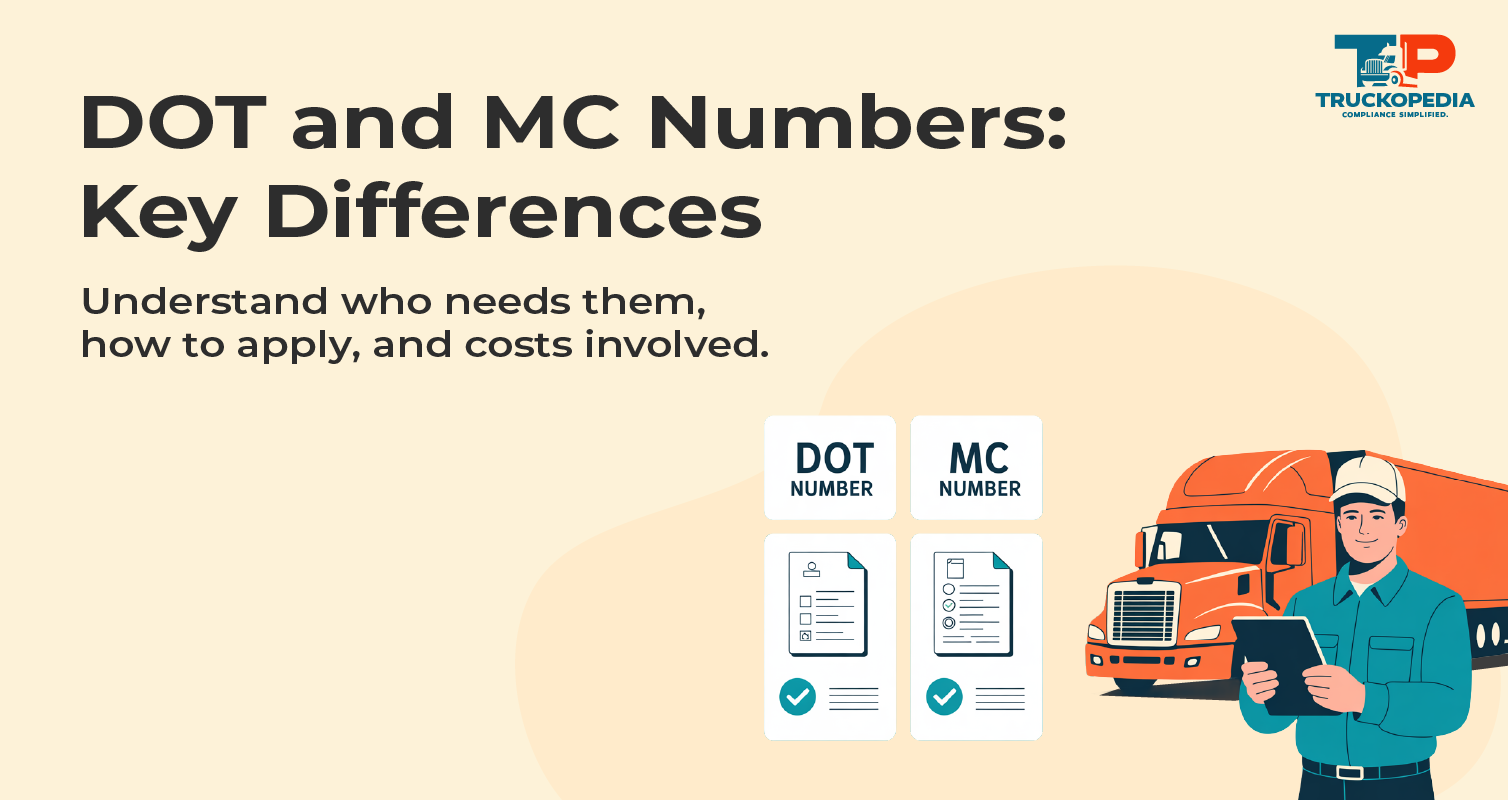
Opening a trucking business takes more than capital and industry know-how, as it also means navigating a long list of regulatory requirements for compliance. Among the most important are your USDOT and MC numbers. Both are issued by the Federal Motor Carrier Safety Administration (FMCSA), but they serve different purposes and directly impact how your operations are regulated.
For new carriers, owner-operators, and freight companies, this paperwork and the related process can quickly become confusing. USDOT and MC numbers may sound similar, but each plays a distinct role in compliance. Knowing which one applies to you is essential for avoiding fines, preventing delays, and staying legally approved to haul freight across state lines. Whether you operate interstate or intrastate, as a private carrier or a for-hire carrier, your operating model determines whether you need a USDOT number, an MC number, or both.
The US Department of Transportation (DOT) uses the USDOT number as a safety and compliance identifier for commercial motor carriers. In contrast, the Motor Carrier (MC) number applies to businesses that transport regulated commodities in interstate commerce for hire. Understanding these differences upfront makes it easier to get set up, insured, and ready to operate without regulatory setbacks.
In this guide, we’ll explain what MC and DOT numbers are, who needs them, how to apply, and what they cost—helping you determine the right requirements for your trucking business before hitting the road.
Understanding the basics: DOT Number and MC Number
DOT Number: The Safety Credential
A DOT number, also known as a USDOT number, is a unique identifier issued by the Federal Motor Carrier Safety Administration (FMCSA) to companies that operate commercial motor vehicles. The FMCSA uses this number to monitor a carrier’s safety performance, including roadside inspections, crash data, compliance reviews, and regulatory audits.
USDOT numbers are typically eight digits long and must be printed or painted clearly on both sides of the power unit for identification during inspections or roadside checks. This unique number is issued to the business—not the individual vehicle—so every truck in the fleet displays the same number.
MC Number: The Operating Authority
An MC number, short for Motor Carrier number, is an operating authority issued by the Federal Motor Carrier Safety Administration (FMCSA) that allows a company to transport federally regulated commodities or passengers across state lines for compensation. Because it grants permission to operate as a for-hire carrier across state lines, an MC number is often referred to as an interstate operating authority. An MC number includes the state abbreviation where your business is based before the number and is usually shorter.
Unlike a USDOT number, which is used to identify a carrier and monitor safety compliance, an MC number establishes a carrier’s economic authority to conduct for-hire interstate operations. If your business hauls freight or transports passengers between states for compensation, you typically need an MC number in addition to a USDOT number.
Carriers that require an MC number must always obtain a USDOT number, as the two serve different regulatory roles: the USDOT number identifies the company and monitors safety, while the MC number authorizes interstate operations.
MC number vs DOT number: Key differences
For trucking companies, understanding the difference between a USDOT number and an MC number goes beyond compliance — it directly affects how the business can operate and generate revenue. These identifiers form the legal and regulatory backbone of a carrier’s authority, ensuring both safety accountability and commercial legitimacy.
| Category | USDOT Number | MC Number |
|---|---|---|
| Purpose | Serves as a unique safety identification number for commercial carriers | Grants operating authority to transport federally regulated commodities or passengers for hire in interstate commerce |
| What It Does | Tracks safety performance, inspections, audits, crashes, and compliance | Authorizes for-hire interstate operations and verifies insurance and authority filings |
| Issued By | FMCSA (Federal Motor Carrier Safety Administration) | FMCSA (Federal Motor Carrier Safety Administration) |
| Required For | Most commercial carriers transporting cargo or passengers | For-hire carriers, brokers, and freight forwarders operating interstate |
| Commerce Type | Interstate and intrastate (depending on state adoption of FMCSA rules) | Interstate commerce only |
| Regulatory Focus | Vehicle safety, compliance, and operational monitoring | Business authority, for-hire status, and insurance regulation |
| Who Should Apply | Carriers operating CMVs over 10,001 lbs, hazmat carriers, passenger carriers, owner-operators, and private fleets | For-hire carriers, brokers, and freight forwarders transporting federally regulated goods or passengers for compensation |
| Cost | Free | ~$300 per authority type |
| Processing Time | Immediately upon approval | Up to 25 business days |
| Identification Function | Yes — used as a safety ID number | No — functions as operating authority, not a safety ID |
| Fleet Use | One USDOT number per company used across all applicable vehicles | One MC number per authority type |
| Display Requirement | Must be printed or painted on each vehicle in the fleet | Not required to be displayed on vehicles |
The difference between DOT and MC numbers
1. Requirements for a DOT Number vs. an MC Number
Obtaining a DOT number is generally simpler than securing an MC number, which involves stricter criteria and additional documentation. You can even apply for a USDOT number before owning a truck, but it’s important to meet all DOT eligibility requirements to avoid application rejection. Also, you must accurately describe your planned operations to avoid delays or corrections after approval.
Who needs a USDOT number?
You are required to obtain a USDOT number if you operate a commercial motor vehicle and meet any of the following conditions:
- Transporting goods or passengers across state lines (interstate commerce)
- Hauling hazardous materials that require placarding
- Carrying 9 or more passengers for compensation (including the driver)
- Carrying 16 or more passengers for free (including the driver)
- Transport passengers or cargo across state lines (interstate commerce)
Additionally, many states impose intrastate USDOT requirements. Currently, 39 states mandate a DOT number even for operations confined within state lines, so always verify your local regulations.
Who needs an MC number?
An MC number is required if your business operates for hire in interstate commerce and falls into one of the following categories:
- Transporting passengers across state lines for compensation
- Transporting federally regulated commodities across state lines, such as manufactured goods, retail freight, construction materials, or machinery
- Operating as a for-hire carrier, broker, or freight forwarder
To apply, you must have a DOT number and submit an OP-1 series form along with the $300 filing fee.
In some cases, a DOT number alone may suffice, including:
- Driving only within a single state and hauling non-regulated goods like fruits or vegetables
- Operating as a private carrier, transporting your own cargo
- Hauling exempt products or working exclusively in federally designated commercial zones
However, if your operations cross state lines and involve regulated cargo, obtaining both a DOT and an MC Number is mandatory for legal compliance.
2. What is the purpose of the DOT Number and the MC number?
Although both are issued by the FMCSA, DOT numbers and MC numbers serve distinct roles in the trucking industry.
Purpose of the DOT number
A DOT number acts as a unique identifier for your commercial vehicles and helps ensure safety compliance. FMCSA and state enforcement agencies use this number to:
- Identify the carrier or business entity responsible for a commercial motor vehicle
- Track safety records, including inspections, crash data, and compliance reviews
- Monitor compliance with federal and state safety regulations
- Confirm that your fleet meets federal safety standards when transporting goods
Purpose of the MC number
An MC number establishes your business’s legal authority to operate as a for-hire carrier. Its primary purposes include:
- Authorizing a business to transport property or passengers for compensation across state lines
- Distinguishing for-hire carriers from private carriers that haul their own goods
- Linking operating authority to required insurance and financial responsibility filings
- Enabling FMCSA to regulate economic authority, not vehicle safety
3. How long does it take to get a DOT or MC number?
The time it takes to obtain a USDOT number versus an MC number varies due to differences in application complexity and federal review requirements. Understanding the timeline can help trucking businesses plan their operations and avoid costly delays.
DOT number timeline
Getting a DOT number is typically a fast process, especially when applying online through the FMCSA’s Unified Registration System (URS). Most carriers receive their DOT number within a few hours to one or two business days if their application is complete and accurate. Mail applications take longer, usually four to six weeks, and errors or missing information can cause delays.
How long does it take to get a DOT number?
MC number timeline
An MC number requires more time because the FMCSA conducts a public review and verifies additional documentation, such as proof of insurance and process agent designations. On average, carriers can expect to receive their MC number and operating authority in 20–25 business days, though complex applications or delays in documentation can extend the process to four to eight weeks or more. Obtaining an MC number takes longer because the FMCSA requires additional documentation and a review period.
4. How much do USDOT and MC numbers cost?
Understanding the costs associated with USDOT and MC numbers helps you plan for regulatory compliance before beginning operations. While some registrations carry no federal filing fee, others require payment to obtain operating authority.
USDOT number cost:
Registering for a USDOT number is free, making it an easy and cost-effective step for new trucking businesses. However, operating a commercial motor vehicle without a required DOT number can lead to hefty fines, sometimes reaching thousands of dollars, citations, and out-of-service orders during inspections. That’s why it’s far safer to secure one upfront.
Know the complete USDOT fees and requirements
MC number cost:
Obtaining an MC number requires a $300 filing fee for permanent operating authority per service class. Payments can be made by credit card or mailed check to the FMCSA. Additional costs may include $80 to reinstate your authority and $14 for a business name change.
Discover the real cost of an MC number and key considerations
5. How to get DOT number and MC number?
Obtaining both a DOT number and an MC number is crucial for trucking businesses, but each involves a separate process, approval steps, and varying timelines. Here’s a breakdown of how to obtain each number:
How to obtain a DOT number?
Follow these steps to apply for your DOT number:
- Confirm eligibility: Ensure your operation qualifies for a DOT number based on vehicle weight, passenger capacity, hazardous materials transport, and whether you operate in interstate or intrastate commerce.
- Gather required information: Prepare accurate business, contact, operational, and vehicle details, including company structure, driver information, and the number and types of commercial vehicles you operate.
- Submit the application: Apply only through the FMCSA Unified Registration System (URS). Ensure all information reflects your actual or planned operations, as incorrect entries can require later updates or corrections.
- Wait for approval: Many applicants receive a USDOT number shortly after submitting the application. In some cases, processing may take several business days, depending on verification requirements.
- Complete the New Entrant Safety Audit: New carriers must undergo a New Entrant Safety Audit within their first year to ensure compliance with federal safety standards.
- Display your USDOT number: Once issued, display your USDOT number prominently on all commercial vehicles at both sides of the power unit as required by FMCSA size, placement, and visibility regulations.
Quick and easy guide to help you get your USDOT number
How to obtain an MC number?
Obtaining an MC number requires several steps, as it involves more documentation than a DOT number. Follow these steps to apply for your MC number:
- Register your business: To apply for an MC number, your business must be registered and have an EIN and a DOT number.
- Get insurance: Secure the minimum liability insurance required for your authority type. Coverage amounts vary based on operations (for example, property carriers commonly require at least $750,000 in liability; passenger carriers may require higher limits). Work with an insurer to determine the best coverage for your business.
- Apply via the FMCSA website: Go to the FMCSA website and access the Unified Registration System (URS). Complete the OP-1 series form for operating authority. You’ll need to provide business, person, and vehicle details.
- Pay the filing fee: Pay the $300 filing fee for each type of operating authority requested. This fee is non-refundable, so ensure your application is correct before submitting.
- Submit additional documentation: Provide proof of liability insurance (BMC-91 or BMC-91X form). Designate a process agent in each state you operate. A process agent accepts legal documents on your behalf.
- Wait for review and approval: After submitting your application, it will undergo a 20-25 day review period, during which the FMCSA checks for public comments or disputes. Once approved, you’ll receive your MC number. Make sure to activate your insurance as required during this time for faster processing.
How to get an MC number: A step-by-step guide
After receiving either number, it’s crucial to keep your registration in good standing. This includes passing a Level 1 DOT inspection and maintaining complete records on vehicles and employees, such as driver qualification files, vehicle maintenance logs, and safety compliance documentation.
6. Where to obtain an MC number and a DOT number?
Both MC and DOT numbers can be obtained directly through the FMCSA’s official website. Applications are submitted online using the Unified Registration System (URS), with separate forms required for each type of number.
For those who prefer extra assistance, third-party service providers can handle the application process on your behalf. However, many new trucking business owners complete the registration themselves, as the process is straightforward and user-friendly.
USDOT vs MC number: Do you need both?
Whether you need a USDOT number, an MC number, or both depends on how your business operates, not just where you plan to expand. The determination is based on whether you operate for hire, engage in interstate commerce, and meet specific federal safety thresholds.
Key factors to consider:
- Route type: Do you operate only within one state, or do your vehicles cross state lines?
- Operating model: Do you transport property or passengers for compensation (for-hire), or only haul your own goods as a private carrier?
- Hazardous materials: Do you transport hazardous materials in quantities that require placarding, which can trigger USDOT registration and additional safety compliance?
- Business plans: Are you planning to add for-hire interstate services that require operating authority?
If your business meets the requirements for both, you will need to complete the USDOT Number application and the MC Number application separately. Having both ensures your company remains compliant, whether operating within one state or across multiple states.
Many interstate carriers require both numbers. The USDOT number tracks safety and regulatory compliance, while the MC number grants legal authority to operate commercially across state lines. However, not every trucking business needs both. Companies operating strictly within a single state or those not transporting goods or passengers for hire may only need a USDOT number and not an MC number. The requirements ultimately depend on your specific operations.
Can you operate without USDOT or MC numbers?
You may operate only if your business is not required to hold a USDOT number or MC number. If your operation does require one or both, and you operate without them, you may be subject to enforcement action.
If your operation requires a USDOT number and you do not have one, you can face citations, fines, or out-of-service orders during roadside inspections or compliance reviews. Enforcement officers may place a vehicle out of service until proper registration is completed, which can result in operational delays and financial impact.
Similarly, operating for hire in interstate commerce without an MC number is a violation of federal regulations. Without a valid operating authority, a business is not legally authorized to transport property or passengers across state lines for compensation. Violations can lead to civil penalties, suspension or revocation of authority, and additional enforcement consequences.
Some businesses may operate legally without one or both numbers, such as private carriers operating solely within a single state or businesses that do not engage in for-hire interstate transportation. Because requirements depend on how you operate—not just what you haul or where you are based—it is essential to confirm your obligations with the Federal Motor Carrier Safety Administration or your state transportation agency before operating.
Can one USDOT and MC number cover multiple trucks?
Yes, a single USDOT number can be used for multiple vehicles, as long as all trucks operate under the same company or legal entity. This allows fleet operators to register all their vehicles under one number, which the FMCSA uses to track safety performance, inspections, crashes, and compliance records across the entire fleet.
If you own multiple businesses or separate operations, each entity usually needs its own USDOT number because each business is individually responsible for its safety compliance and legal obligations.
On the other hand, an MC number functions differently. It grants your company the authority to transport goods or passengers for hire across state lines. This authority is tied to the company itself, not individual trucks, so one MC number covers all vehicles within the business for interstate operations.
Streamlining your operations with USDOT and MC Numbers
Staying compliant with federal regulations and expanding your trucking business requires obtaining the right identification numbers—USDOT and MC numbers. While both are essential for operation, understanding the key differences between them ensures you’re meeting the requirements.
A USDOT number is required for companies engaged in interstate commerce to track their safety performance and regulatory compliance. On the other hand, an MC number is necessary for transporting regulated commodities across state lines, granting you operating authority.
By securing both numbers, you not only ensure regulatory compliance but also unlock access to broader markets, enhance your company’s credibility, and increase your chances of securing valuable government contracts. In the competitive transportation industry, these numbers are more than just requirements—they are foundational to your business’s growth and success.
Whether you’re starting a new trucking business or scaling up, understanding the distinctions between these identifiers is key to navigating federal regulations and avoiding costly penalties.