Back to Blogs
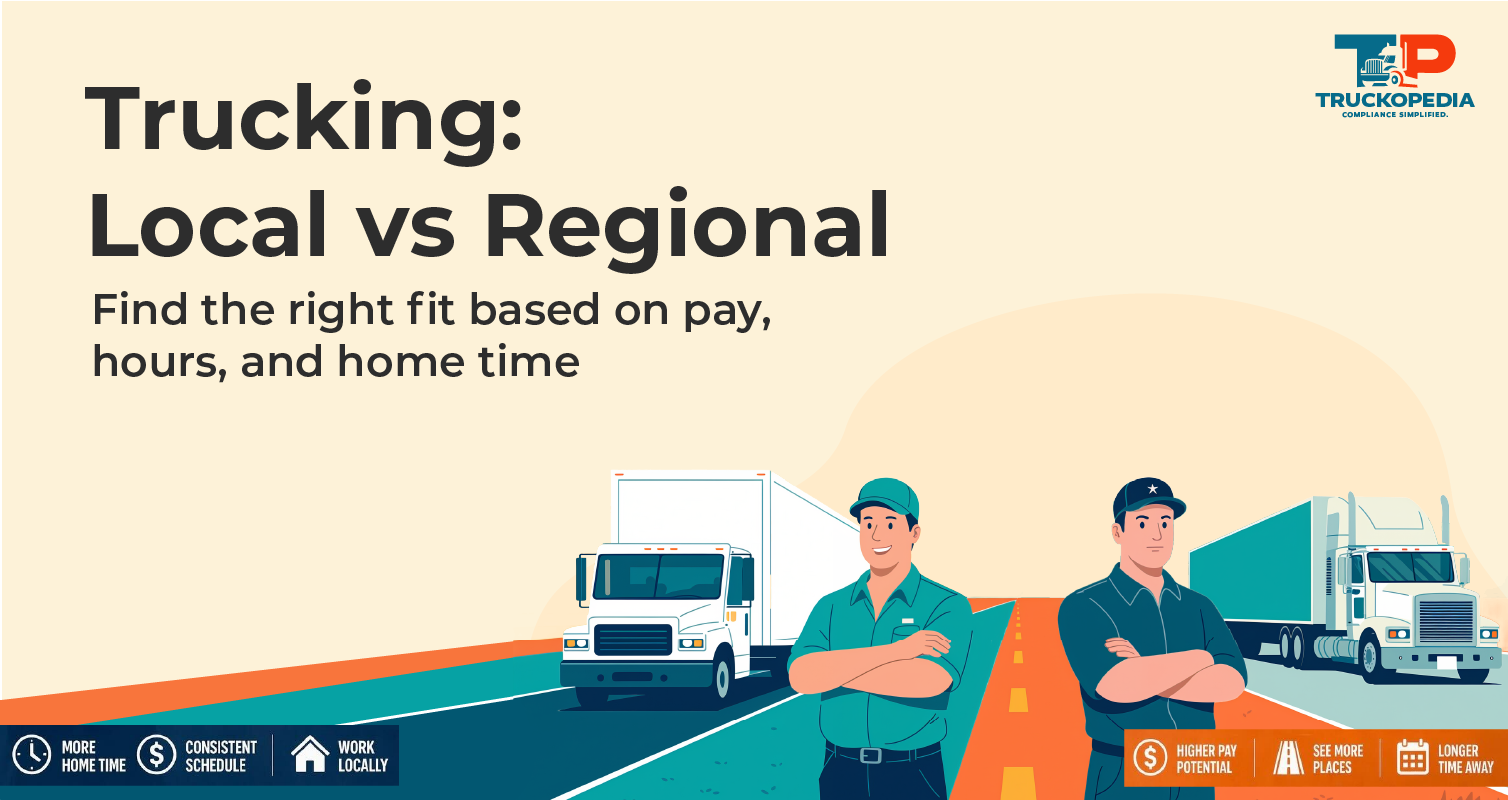
If you’re exploring a trucking career, one of the first decisions you’ll face is choosing between local and regional trucking. Both offer steady work, but they differ in distance, schedule, pay, and lifestyle.
Understanding how regional trucking compares to local driving will help you choose the option that fits your goals, availability, and earning expectations.
What is Regional Trucking?
Regional trucking involves hauling freight within a defined area, typically across multiple states in a specific region.
If you’re wondering what regional means in trucking, it usually refers to trips that last a few days—but not weeks like long-haul (OTR) driving. Regional drivers operate within set territories—such as the Midwest, Southeast, or West Coast—and often return home weekly, depending on the route and company.
In simple terms, regional trucking sits between local and long-haul driving, offering a balance of distance, pay, and home time.
Examples of Regional Trucking
- Delivering goods across neighboring states
- Transporting retail or grocery freight to distribution centers
- Hauling manufacturing materials between cities in the same region
- Running dedicated routes between warehouses and hubs
These routes typically involve moderate distances and may include overnight stays.
What is Local Trucking?
Local trucking involves transporting goods within a limited area—typically a city, metro region, or nearby towns. In simple terms, it means short-distance driving with daily home time.
Local drivers usually complete multiple trips in a single day and return home after each shift, making it a strong fit for those who prefer consistent schedules and minimal time away from home.
Examples of Local Trucking
- Delivering goods to retail stores within a city
- Transporting construction materials to nearby job sites
- Handling last-mile deliveries from warehouses
- Distributing food and beverages to local businesses
Local routes are typically short, repetitive, and completed within the same day.
Differences Between Regional and Local Trucking
Regional and local trucking differ mainly in distance, schedule, and lifestyle.
Regional drivers travel across multiple states and may spend several days on the road, while local drivers operate within a city or nearby area and typically return home the same day. These differences affect everything from earnings to daily routines and overall work experience.
Here are some differences to consider:
Scope of operations: Regional trucking covers a multi-state area within a defined region. Local trucking is limited to a city, metro area, or nearby towns.
Driving distance: Regional routes often involve hundreds of miles per trip and may cross state lines. Local routes are short and stay within a limited radius.
Home time: Regional drivers are usually home every few days or weekly. Local drivers return home daily.
Cargo type: Regional trucking often involves a mix of freight across industries. Local trucking tends to focus on consistent deliveries within the same area.
Time on the road: Regional trips can last several days, while local routes are completed within a single shift.
Type of route: Regional routes may vary and include highways and intercity travel, offering some variety. Local routes are usually fixed and repetitive, focusing on specific delivery points within a city.
Type of equipment: Regional trucking commonly uses full tractor-trailers designed for longer hauls. Local trucking may involve smaller equipment like day cabs, box trucks, or shorter trailers suited for urban driving.
Earning potential/Salary: Regional trucking generally offers higher pay due to longer distances and mileage-based compensation. Local trucking provides more stable but comparatively lower earnings.
Delivery area: Regional drivers deliver across multiple states within a region, while local drivers operate within a defined local area, often returning to the same base daily.
Customer base: Regional trucking involves working with a wider range of customers across different locations. Local trucking typically deals with a consistent set of local clients or businesses.
Work hours: Regional drivers may have longer and less predictable hours depending on routes and schedules. Local drivers usually follow more consistent and predictable work shifts.
Respilities: Regional drivers focus more on long-distance driving with occasional loading or unloading. Local drivers often handle more frequent stops and may be more involved in loading, unloading, and customer interactions.
Career advancement – Regional trucking can open doors to long-haul (OTR) or specialized roles, offering more growth opportunities. Local trucking provides stability but may have fewer options for advancement.
The table below breaks down these distinctions to help you compare both options easily.
| Factor | Regional Trucking | Local Trucking |
|---|---|---|
| Scope of operations | Covers multiple states within a region | Limited to the city or nearby areas |
| Driving distance | Medium-distance hauls (hundreds of miles) | Short-distance trips |
| Home time | Weekly or every few days | Daily home time |
| Cargo type | Mixed freight across industries | Often consistent, local deliveries |
| Time on the road | Multiple days per trip | Same-day routes |
| Type of route | Fixed or semi-flexible regional routes | Repetitive local routes |
| Type of equipment | Tractor-trailers, long-haul trucks | Box trucks, day cabs, or smaller trailers |
| Earning potential | Generally higher pay | Moderate but stable pay |
| Delivery area | Multi-state region | Single city or metro area |
| Customer base | Broader, includes regional clients | Local businesses and retailers |
| Work hours | Longer shifts, irregular at times | More predictable schedules |
| Responsibilities | Driving + some loading/unloading | Often more hands-on deliveries |
| Career advancement | More opportunities to move into OTR or specialized roles | Limited but stable growth paths |
What are the Pros and Cons of Regional Trucking?
Regional trucking sits between local and long-haul driving—it offers higher earning potential than local work, without being on the road for weeks at a time.
But like anything in trucking, it comes with trade-offs.
Pros of Regional Trucking
Higher earning potential: Regional routes typically cover more miles than local runs, which often means better pay through mileage, bonuses, or specialized freight.
Home time (often weekends): Many regional drivers are home weekly, and in some roles, weekends are consistent—something long-haul drivers don’t always get.
More variety in work: Regional drivers work across multiple states and industries, which keeps the job from feeling repetitive.
Changing scenery: You’re not running the same city routes every day—regional driving offers more movement and less monotony.
Balanced experience: It gives you a mix of long-distance driving and home time, without committing to full OTR life.
Cons of Regional Trucking
Overnight stays required: You’ll spend at least a few nights on the road during most trips.
Longer working hours: Trips can involve extended driving, tight schedules, and strict hours-of-service rules.
Time away from home: Even with weekly home time, you’re still gone for multiple days at a time.
Road fatigue and conditions: Longer routes mean dealing with changing traffic, weather, and road conditions, which can wear on you over time.
Higher vehicle wear and costs: More miles mean more maintenance—and for owner-operators, higher operating costs.
Fuel cost impact (for independents): Longer routes increase fuel usage, and price fluctuations can affect margins.
In short: Regional trucking offers better pay and more variety—but it comes with more time on the road and a heavier workload.
What are the Pros and Cons of Local Trucking?
Local trucking is built around short routes, daily home time, and predictable schedules.
It’s a strong fit for drivers who value routine and being home every day—but it comes with trade-offs in pay, variety, and workload.
Pros of Local Trucking
Daily home time: You’re home after every shift, making it easier to maintain a consistent work-life balance.
Predictable schedule: Many local roles follow set shifts, so you know when you’re working and when you’re off.
Familiar routes: Driving the same area regularly helps you learn roads, traffic patterns, and delivery points—making the job more efficient over time.
Built-in breaks throughout the day: Multiple stops often mean short breaks between deliveries, which can make the day feel more manageable.
Stable work environment: Consistent routes and customers create a structured, predictable workflow.
Cons of Local Trucking
Lower earning potential: Shorter routes usually mean lower pay compared to regional or long-haul roles.
Repetitive routes: Running the same routes daily can become monotonous if you prefer variety.
More hands-on work: Local drivers often handle loading and unloading, which can be physically demanding.
Urban driving challenges: Tight streets, traffic, and frequent stops can make local driving more stressful and time-consuming.
Limited growth opportunities: There may be fewer paths into higher-paying or specialized roles compared to regional or long-haul trucking.
In short: Local trucking offers consistency and daily home time—but trades off higher pay and variety
Should I Become a Regional or Local Truck Driver?
Choosing between regional vs local trucking comes down to how you want to work—and how you want to live.
If your priority is higher income and more variety, regional trucking is usually the better fit. You’ll cover longer distances, gain broader experience, and open the door to more advanced roles over time.
If you value stability, predictable hours, and being home every day, local trucking is the stronger option. It offers consistency and a routine that’s easier to manage long-term.
It also comes down to how you want to spend your day:
- Regional drivers spend more time driving longer distances
- Local drivers handle more stops, deliveries, and hands-on work
A simple way to decide:
- Want more pay and variety? Go regional
- Want consistency and daily home time? Go local
Final Thoughts on Regional vs Local Trucking
Regional and local trucking both offer steady, reliable career paths—but they lead to very different day-to-day experiences. There’s no one “better” option—only the one that fits your priorities.
Choose the path that matches your lifestyle, income goals, and how you want your workday to look.