Back to Blog
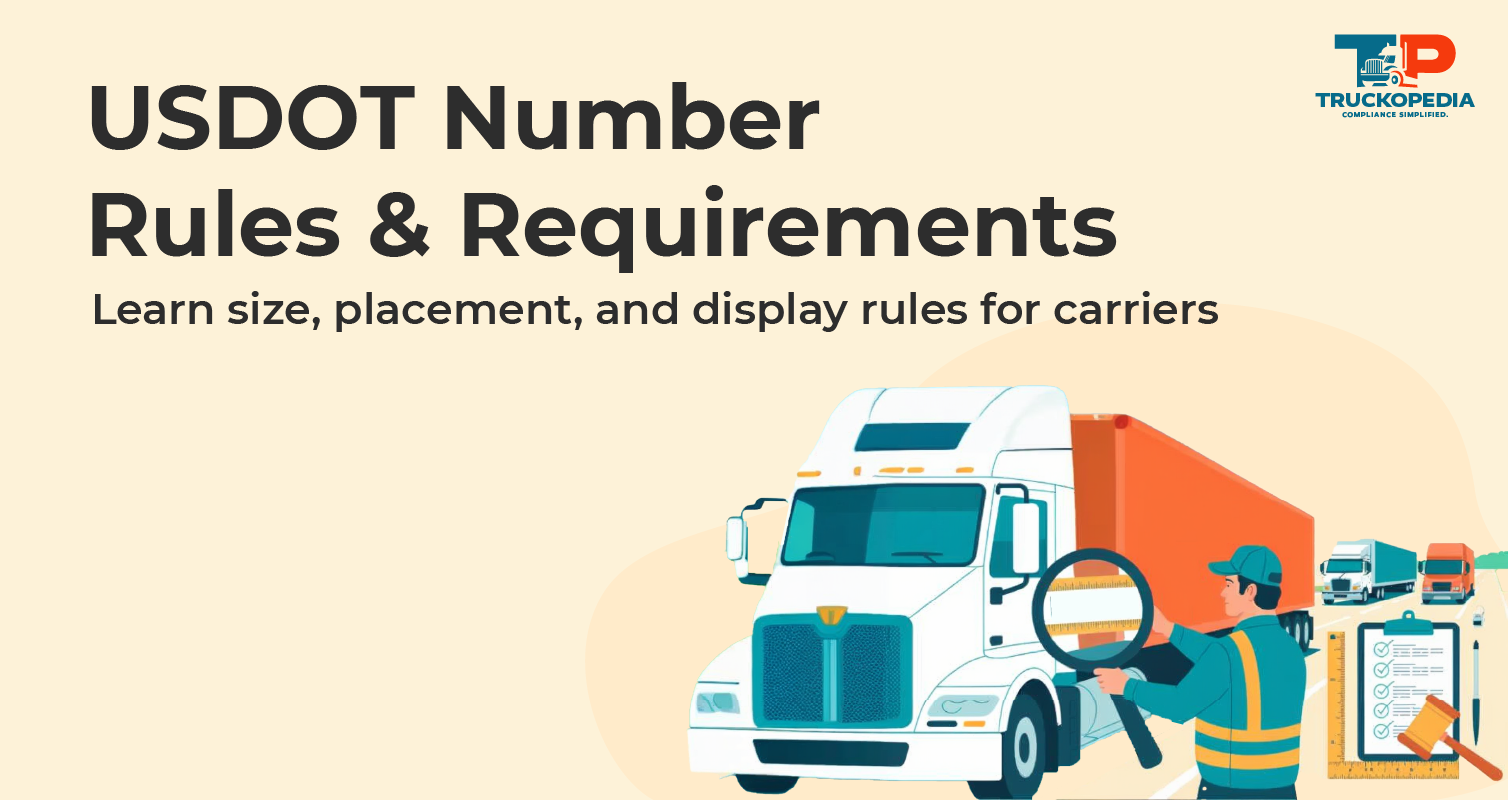
If your business transports passengers for hire or hauls cargo across state lines, obtaining a USDOT number is a legal requirement. This unique identifier is issued by the Federal Motor Carrier Safety Administration (FMCSA) and allows regulators to monitor a carrier’s compliance, safety performance, and insurance status.
Securing a USDOT number is just the first step toward operating as a legitimate motor carrier, and understanding USDOT number requirements is crucial not only while applying but also when displaying the number properly on commercial vehicles. Every carrier must be familiar with the USDOT application process, along with the size and placement rules, as these are key components for proper registration and compliance.
And, it’s for both seasoned truckers and newcomers entering the industry as compliance serves multiple essentials, including road safety, avoiding penalties, and protecting cargo. Whether you’re a trucker, freight broker, shipper, or carrier, verifying and maintaining your USDOT information ensures your business remains compliant with federal regulations.
What is a USDOT number?
A USDOT number is a federal identifier used by the U.S. Department of Transportation to track commercial carriers and their safety performance. This number is assigned to motor carriers operating commercial vehicles, especially those operating in interstate commerce. Federal and state enforcement agencies use this number to monitor safety records, roadside inspections, crash reports, and regulatory compliance. While not every commercial vehicle needs a USDOT number, certain vehicle types and operating conditions make it legally required to operate.
A complete guide on the USDOT number
When is a USDOT number required?
A USDOT number is required when your commercial vehicle operations meet specific federal or state safety regulations. While the requirement most commonly applies to interstate carriers under federal rules, it can also extend to intrastate operations depending on state regulations.
Interstate operations:
You must get a USDOT number if you operate a commercial motor vehicle in interstate commerce and meet any of the following conditions:
- Weight: You operate a vehicle(s) with a GVWR or GCWR over 10,000 lbs.
- Passenger transport (compensated): You transport 9–15 passengers (including the driver) for direct or indirect compensation.
- Passenger transport (capacity): You transport 16 or more passengers (including the driver), regardless of compensation.
- Hazardous materials: You transport hazardous materials in quantities that require placarding under federal regulations
- Interstate commerce: You engage in trade, transportation, or traffic across state lines.
Intrastate operations:
While federal rules primarily apply to interstate carriers, many states require businesses operating solely within their borders to obtain a USDOT number as well. These requirements vary from state to state, so carriers should review local regulations to determine if a USDOT number is necessary for intrastate operations.
DOT number requirements
To obtain a USDOT number, you must complete the Federal Motor Carrier Safety Administration (FMCSA) registration through its online system and provide accurate information about your business, vehicles, and operations. Once issued, you are required to comply with federal display rules that govern how the USDOT number appears on your commercial vehicle. These rules cover proper placement on the vehicle, minimum character height, legibility, and sufficient color contrast so the number is clearly visible during roadside inspections. The following sections break down the key requirements, from applying to displaying your USDOT number correctly.
USDOT number application requirements
During the USDOT application process, you must provide detailed business, operational, and safety-related information. The FMCSA uses this data to determine your carrier classification, compliance obligations, and safety oversight requirements. Key information required includes:
- Business details: Legal business name, physical address, mailing address, and contact details.
(Note: A valid physical address is required and verified through USPS. Inaccurate information may prevent submission.)
- Identification numbers: Employer Identification Number (EIN) or Social Security Number (SSN), depending on the business structure.
- Contact information: Personal and business contact details, including a designated point of contact for FMCSA communication.
- Operation classification: Whether the operation is For-Hire, Private Carrier, Exempt For-Hire, Broker, or other qualifying category.
- Type of transportation: Whether the carrier transports passengers, cargo, or both.
- Vehicle information: Number and types of commercial vehicles, along with their Gross Vehicle Weight Ratings (GVWRs).
- Driver information: Number of drivers and their status (interstate vs. intrastate operation).
- Cargo details: Type of cargo being transported, including whether the operation involves hazardous materials (Hazmat).
Ready to proceed? Follow the step-by-step guide to obtaining your USDOT number.
Size requirements for USDOT numbers
To remain compliant, your USDOT number must be displayed on your commercial vehicle so it is clearly visible and legible during roadside inspections. Federal motor carrier regulations set minimum standards for size and contrast to ensure that enforcement officers can easily identify the carrier.
Minimum lettering height:
USDOT numbers must be printed in lettering that is at least two inches tall, ensuring they can be read from up to 50 feet away. The font should be bold, clean, and easily recognizable to support quick visibility during roadside inspections and compliance checks. Be sure to leave adequate space for any additional required markings—such as an MC number—since many carriers are required to display both.
Color contrast:
Your USDOT number must contrast sharply with the background color of the vehicle. High contrast improves visibility in varying light and weather conditions and reduces the risk of misreading during inspections.
- For dark trucks—such as black, navy, or brown—white or other light-colored lettering is recommended.
- For lighter vehicles, black or darker decals provide the best readability and visibility.
Using a clean, bold font further helps prevent misinterpretation and supports compliance during inspections.
Display requirements for USDOT numbers
Properly displaying a USDOT number is crucial for regulatory compliance and quick identification by enforcement officials. Federal marking rules require the number to be easily visible and legible during inspections and roadside stops.
Location on the vehicle:
Your USDOT number must be displayed on both sides of the power unit. It is commonly placed on the exterior of the cab door, but any location on the power unit is acceptable as long as the marking is unobstructed and easily identifiable while the vehicle is in operation.
Legibility & visibility:
The USDOT number must meet minimum legibility standards, including required character height and strong color contrast with the vehicle surface. The marking should not be obscured by graphics, equipment, or accessories, and it should be placed away from areas where dirt, grime, or road spray commonly accumulate. Obstructed or unreadable markings can lead to delays or violations during inspections by the Federal Motor Carrier Safety Administration.
Staying compliant with USDOT number requirements
Obtaining a USDOT number is the first step toward operating legally as a motor carrier, but maintaining compliance goes beyond just obtaining one. You must ensure that all business, vehicle, and operational information submitted during the application process remains accurate and up to date, and that your USDOT number is displayed correctly on each applicable commercial vehicle. Federal requirements govern size, placement, font clarity, and color contrast to ensure the number is clearly visible and legible during inspections and roadside enforcement activities conducted by the FMCSA.
Whether you operate in interstate or intrastate commerce, understanding the requirements and adhering to them protects your business from fines, improves safety, and ensures your operations run smoothly. Staying informed, verifying your information, and displaying your USDOT number properly are essential steps in maintaining regulatory compliance and keeping your commercial operations safe and legal.