
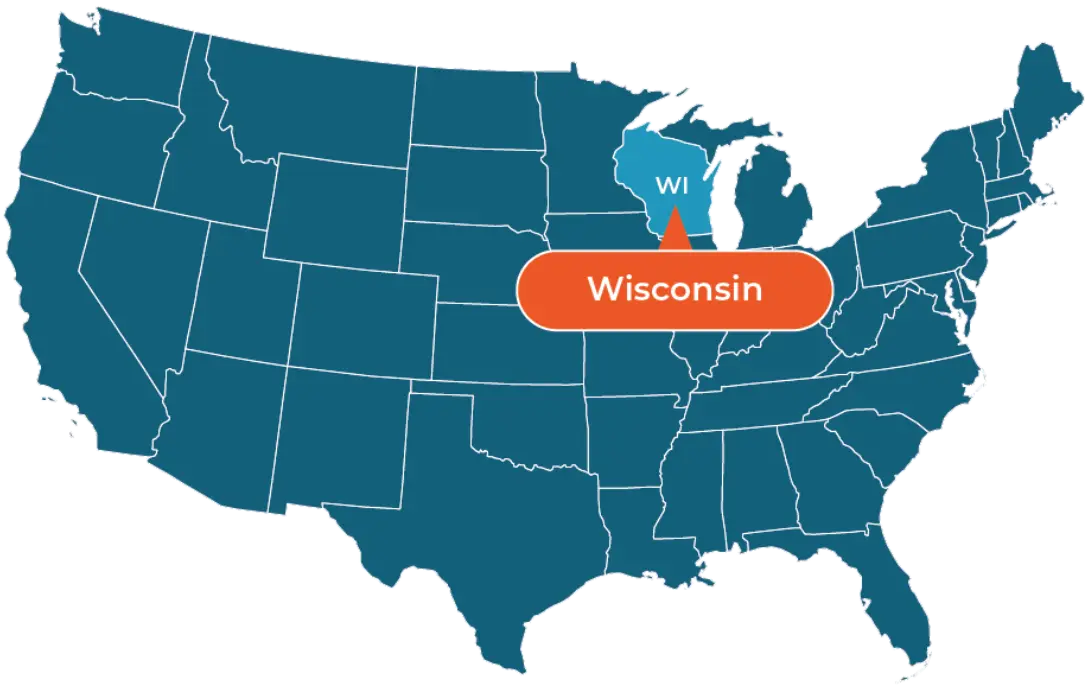
IFTA Reporting and Filing Requirements in Wisconsin
Who Needs IFTA Registration in Wisconsin?
You need Wisconsin IFTA registration if you operate a qualified motor vehicle in interjurisdictional operations and travel between Wisconsin and one or more IFTA member jurisdictions.
Under the International Fuel Tax Agreement (IFTA), a qualified motor vehicle is a vehicle used, designed, or maintained for transporting persons or property that:
- Has two axles and a gross vehicle weight or registered gross vehicle weight exceeding 26,000 pounds
- Has three or more axles regardless of weight
- Is operated in combination when the combined gross vehicle weight exceeds 26,000 pounds
Wisconsin is your base jurisdiction for IFTA if you:
- Have qualified motor vehicles based in Wisconsin for vehicle registration purposes
- Maintain operational control and operational records in Wisconsin or can make those records available to Wisconsin
- Have one or more qualified motor vehicles that travel on Wisconsin highways
- Operate in at least one other IFTA jurisdiction
If your operations meet these requirements, you must obtain a Wisconsin IFTA license and display valid IFTA stickers on each qualified motor vehicle.
Recreational vehicles are exempt from IFTA requirements. This includes motorhomes, pickup trucks with attached campers, and buses used exclusively for personal pleasure. To qualify for the exemption, the vehicle cannot be used in connection with any business activity.
How Do You Apply for an IFTA License in Wisconsin?
The Wisconsin Department of Transportation (WisDOT) Division of Motor Vehicles administers the state’s IFTA program through Motor Carrier Services.
Before applying for a Wisconsin IFTA license, ensure that:
- Your business is properly registered, if applicable
- Your USDOT Number is active and current
- Your FEIN is on file with the Federal Motor Carrier Safety Administration (FMCSA)
- Any required operating authority is active
- For-hire carriers have valid insurance and authority on file
Wisconsin requires corporations and LLCs to be registered and in good standing with the Wisconsin Department of Financial Institutions before an IFTA application can be processed. Out-of-state organizations conducting business in Wisconsin must also be properly registered as foreign corporations.
- Complete the IFTA Application To apply for a new Wisconsin IFTA license, complete the Wisconsin International Fuel Tax License Application (Form MV2667).
The form can also be used to:
- Change a business name or FEIN
- Request additional stickers
- Order a replacement license
- Update a physical or mailing address
- Reinstate an IFTA license
- Submit the Application Mail the completed application, required documentation, and payment to:
Wisconsin Department of Transportation
Motor Carrier Registration Unit
P.O. Box 7979
Madison, WI 53707-7979
Once approved, Wisconsin issues:- One IFTA license
- One set of two stickers for each qualified motor vehicle
Once your account is established, you can request access to WisCRS to- Manage your IFTA account,
- Submit annual renewals,
- Order replacement stickers or licenses,
- File quarterly returns online.
What Are the IFTA Reporting Requirements in Wisconsin?
Wisconsin IFTA license holders must file quarterly fuel tax returns reporting all miles traveled and fuel purchased in each IFTA member jurisdiction where qualified motor vehicles operated.
To complete an accurate return, carriers should maintain records of:
- Total fleet mileage
- Miles traveled in each jurisdiction
- Fuel purchases by jurisdiction
- Tax-paid fuel receipts and invoices
- Supporting trip records and distance documentation
Wisconsin requires all IFTA licensees to file quarterly returns, even if:
- No operations occurred during the quarter
- No taxable fuel was used
- No tax is owed
A return is still required for a quarter with no operations.
Wisconsin requires carriers to retain adequate mileage and fuel records for four years from the filing date of the quarterly return. Summaries must be supported by source documents, including individual vehicle distance records, trip reports, fuel receipts, and invoices.
Failure to maintain adequate records may result in audit assessments and additional fees or tax liabilities.
How Do You File an IFTA Report in Wisconsin?
Wisconsin allows IFTA returns to be filed electronically through the WisCRS online system. Carriers without online access may file a paper return.
-
Prepare Your IFTA Report
Before filing your quarterly return, gather:
- Miles traveled in each IFTA jurisdiction
- Fuel purchase records
- Fuel receipts and invoices
- Vehicle trip records
- Supporting mileage documentation
-
Submit Your IFTA Return
Once your report is prepared, log in to the Wisconsin WisCRS Online System and submit your quarterly return.
When filing, report:
- Total fleet miles and gallons
- Total and taxable miles traveled in each jurisdiction
- Tax-paid gallons purchased in each jurisdiction
- Any non-IFTA miles, if applicable
When is Quarterly IFTA Filing Due in Wisconsin?
Wisconsin IFTA license holders must file fuel tax returns quarterly, regardless of whether any operations occurred during the reporting period.
You must file Wisconsin IFTA returns according to the following schedule:
| Wisconsin Reporting Period | Wisconsin IFTA Filing Deadline |
|---|---|
| January – March (1st Quarter) | April 30 |
| April – June (2nd Quarter) | July 31 |
| July – September (3rd Quarter) | October 31 |
| October – December (4th Quarter) | January 31 |
If a filing deadline falls on a weekend or legal holiday, the return is considered timely if filed on the next business day.
Wisconsin requires all IFTA licensees to submit quarterly returns, even if:
- No operations occurred during the quarter
- No taxable fuel was used
- No tax is due
Failure to file a required return or pay the amount due by the deadline may result in penalties and interest.
What Are the IFTA License Costs and Fees in Wisconsin?
Wisconsin charges fees for an IFTA license and stickers.
For a new Wisconsin IFTA account, carriers must pay:
- A $15 application fee
- A $3 license fee
- A $2 fee for each set of two IFTA stickers
Once approved, carriers receive:
- One Wisconsin IFTA license
- One set of two IFTA stickers for each qualified motor vehicle
These credentials allow carriers to operate in all IFTA member jurisdictions under a single fuel tax license.
Wisconsin also allows carriers to:
- Order additional stickers for $2 per set when vehicles are added to a fleet
- Request a replacement license
- Reinstate an existing IFTA account
- Update account information through Form MV2667 or the WisCRS online system
A $25 IFTA reinstatement fee applies when a revoked or suspended account must be restored. Other fees may apply for replacement licenses, address changes, late renewals, or related IRP account actions.
Carriers are also responsible for:
- Fuel taxes due
- Interest charges
- Penalties resulting from late filings or late payments
Maintaining accurate records and filing quarterly returns on time helps avoid additional compliance costs.
What Are the IFTA Penalties and Interest in Wisconsin?
Wisconsin assesses penalties and interest when IFTA returns are filed late, required returns are not submitted, or taxes are not paid by the due date.
Returns that are not filed or paid in full by the deadline are considered delinquent and may be subject to penalties and interest.
The Wisconsin IFTA penalty is the greater of:
- $50, or
- 10% of the net tax due
Wisconsin may waive the penalty once during the life of an IFTA account if the licensee demonstrates reasonable cause.
Interest is charged on delinquent taxes owed to each jurisdiction. It is calculated from the date the tax was due for each month or fraction of a month until the balance is paid. The interest rate is based on Section 6621(a)(2) of the Internal Revenue Code and is adjusted annually on January 1. Interest cannot be waived.
Failure to maintain adequate mileage and fuel records may result in:
- Additional tax assessments
- Audit adjustments and fees
- Reduced refunds or additional amounts due
- Possible revocation of IFTA privileges
Wisconsin may revoke an IFTA license for failing to file returns, pay taxes or assessments, or maintain required records.
To avoid penalties and interest, Wisconsin carriers should:
Retain supporting documentation for audit purposes
File all quarterly returns on time
Pay any tax due by the filing deadline
Maintain complete mileage and fuel records
How Do You Renew an IFTA License in Wisconsin?
Wisconsin IFTA licenses must be renewed annually. All Wisconsin IFTA accounts expire on December 31.
The Wisconsin Department of Transportation makes annual renewals available in early October. Renewal notices are emailed to current licensees with an email address on file, while paper notices are mailed to other licensees.
Carriers with WisCRS access can renew online by:
- Logging in to the WisCRS Online System
- Reviewing their account information
- Confirming that all required quarterly returns have been filed
- Paying the renewal fees and any outstanding balances
- Completing and paying for the renewal
Carriers without WisCRS access may complete and return the paper renewal notice with the required payment. A renewal is not complete until payment has been submitted.
Wisconsin may deny renewal if required quarterly returns have not been filed, fuel or registration tax payments are delinquent, or the account is revoked or canceled.
Once the renewal is processed, Wisconsin issues:
- A new IFTA license
- New annual stickers for each qualified motor vehicle
The following year’s stickers cannot be displayed before December 1.
Important IFTA Documents & Online Filing in Arizona
- IFTA User Guide: Wisconsin IFTA Instruction Manual
- Wisconsin Department of Transportation – Motor Carrier Services:
https://wisconsindot.gov/Pages/dmv/com-drv-vehs/mtr-car-trkr/ifta.aspx - Application for Wisconsin Fuel Tax License: Form MV2667 – Wisconsin International Fuel Tax License Application
- Wisconsin IFTA Fuel Tax Report (Diesel): Form MV2755 – Wisconsin IFTA Quarterly Fuel Tax Report (Diesel)
- Online Wisconsin Filing for IFTA: WisCRS (Wisconsin Credentialing and Registration System)
https://wisconsindot.gov/Pages/dmv/com-drv-vehs/mtr-car-trkr/wiscrs.aspx - Wisconsin IFTA Tax Phone #: (608) 266-9900
- Wisconsin IFTA Tax Email: irp-ifta@dot.wi.gov
Simplify Your IFTA Reporting with eIFTA by Truckopedia
eIFTA makes it easy to prepare accurate, file-ready IFTA reports without the hassle of manual calculations or paperwork. The platform helps you streamline your entire reporting process with a simple and efficient workflow.
- Automatically applies the latest IFTA tax rates for each quarter
- Lets you import vehicle mileage and fuel data with ease
- Calculates taxes owed or credits instantly
- Generates reports in a format ready for filing
With eIFTA, you reduce errors, save time, and stay compliant with IFTA requirements.

Accurate IFTA Reports for Your State—Ready in Minutes
Simplify your quarterly IFTA reporting with accurate, state-based calculations.